

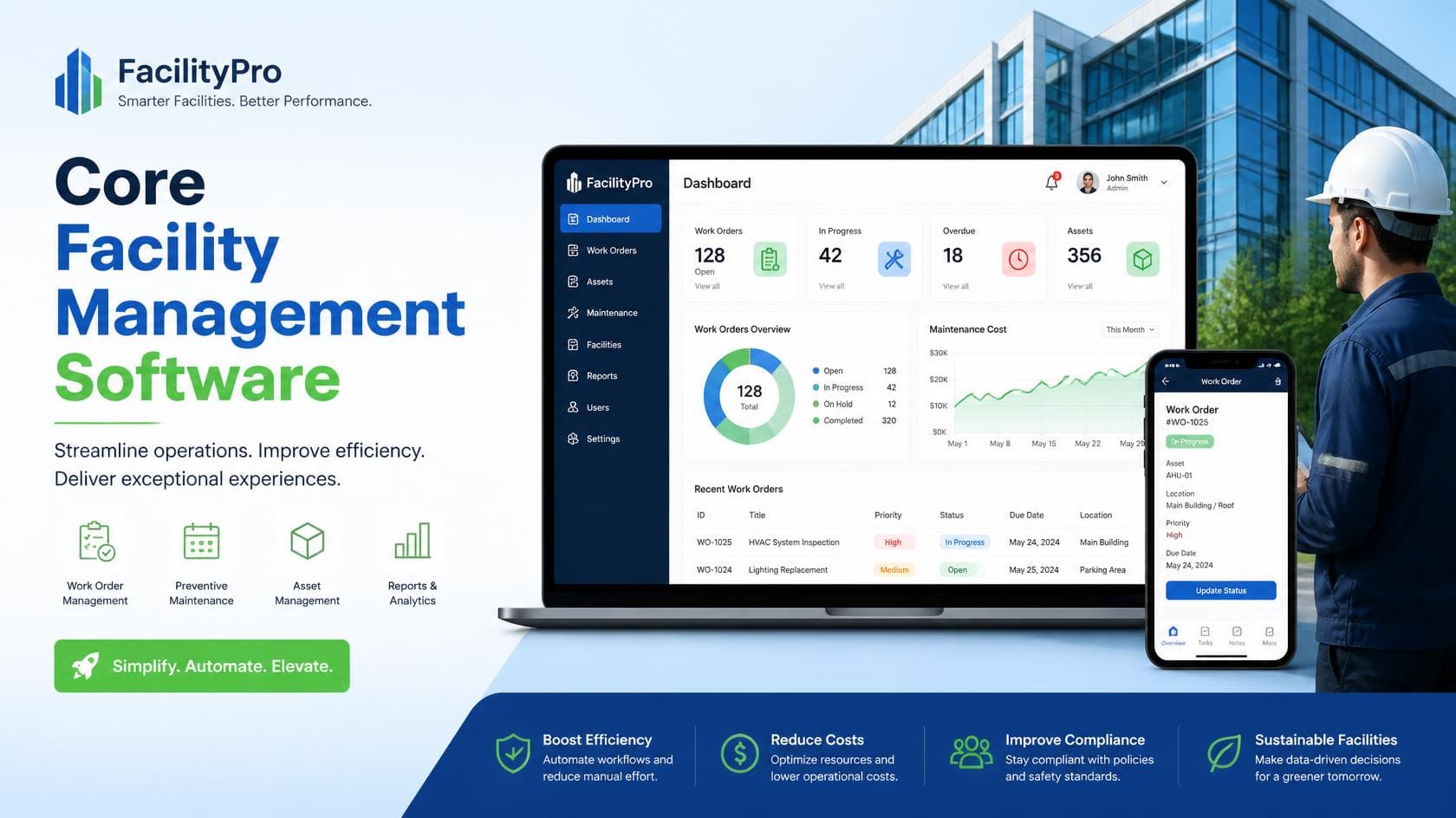
Running a research core is more than putting instruments on a calendar. You must manage users, bookings, services, maintenance, billing, and reports at the same time. The right core facility management platform can bring these tasks into one place and reduce daily administrative work.
For U.S. universities, hospitals, biotech companies, and research centers, the choice often depends on facility size and workflow complexity. This guide compares leading core facility management platforms and explains the features, costs, and practical factors worth considering in 2026.
What Is Core Facility Management Software?
Core facility software helps research organizations manage shared instruments, researchers, services, reservations, and financial workflows. Instead of relying on spreadsheets and email, a dedicated facility management system keeps operational data together.
A research core facility may support dozens of laboratories and hundreds of researchers. Therefore, shared resource management needs more than a basic calendar. Modern systems can connect shared equipment management, billing, maintenance, access rules, and reporting within one workflow.
How Core Facility Management Software Works
The basic process is simple. A researcher checks equipment availability, makes a reservation, and uses the instrument. The system can record the session, calculate charges, and update usage data. This makes instrument management software useful for both administrators and researchers.
Key Features to Look for in Core Facility Management Software
The best systems combine scheduling with financial and operational controls. Look for equipment management software that supports equipment scheduling software, user permissions, maintenance records, and reporting. These features matter because shared instruments often have strict training and access requirements.
A strong platform should also support instrument booking system workflows and resource scheduling. For example, an imaging core may need to restrict certain microscopes to trained users. A booking system should enforce that rule automatically instead of depending on manual checks.
| Feature | Why It Matters |
| Equipment scheduling | Reduces booking conflicts |
| Access control | Restricts instruments to approved users |
| Billing | Supports accurate usage charges |
| Maintenance | Blocks unavailable equipment |
| Reporting | Shows demand and utilization |
| Service requests | Tracks work from request to completion |
1. Genemod – Best for Connected Lab and Core Facility Operations
Genemod takes a connected approach to facility operations. Its equipment tools can support reservations, maintenance, utilization, and user permissions. The platform also connects facility activity with broader laboratory workflows such as samples, experiments, and inventory.
That approach can suit research groups that want laboratory facility management and scientific workflows in one environment. It is particularly interesting when scientific equipment management needs to connect with the actual research process rather than remain a separate administrative task.
2. iLab Solutions – Best for Large University Core Facilities
iLab Solutions focuses strongly on institutional core operations. Its capabilities include scheduling, service requests, billing, chargebacks, compliance, and multi-department access. The competitor source describes it as particularly suitable for large universities managing numerous cores.
For large university core facilities, billing can become complicated quickly. Different departments, grants, and external users may require different rates. A platform with chargeback management, internal billing, and financial workflows can reduce manual reconciliation.
3. Stratocore – Best for Multi-Site and Multi-Campus Facilities
Stratocore targets organizations managing resources across several locations. Its strengths include cross-site scheduling, centralized reporting, and billing. That makes it relevant to universities and research organizations with distributed facilities.
A multi-campus organization needs consistent rules across locations. Multi-site facility management can provide one view of resources while keeping local operations organized. This can also support better resource utilization when administrators need to compare demand between sites.
4. SUMS – Best for Mid-Sized Shared Equipment Programs
SUMS focuses on shared equipment programs that need core booking, usage records, invoicing, and basic reporting. The competitor describes it as a middle-ground option for facilities that do not require the complexity of larger enterprise platforms.
For a medium-sized facility, simplicity can be valuable. A straightforward shared resource scheduling software platform may reduce training needs while still supporting usage tracking and billing. That balance can make sense for programs with a moderate number of instruments.
5. Open IRIS – Best Open-Source Core Facility Management Software
Open IRIS offers an open-source approach to instrument scheduling, users, and basic billing. Institutions with strong technical teams can benefit from source-code access and customization. However, self-hosted software still requires internal resources for deployment and maintenance.
Open-source does not always mean zero cost. Your organization may still need servers, technical support, security updates, and staff time. For institutions seeking customizable research equipment management software, that trade-off deserves careful consideration.
6. BookitLab – Best for Simple Equipment Booking and Scheduling
BookitLab takes a simpler approach. Its focus is visual scheduling, user permissions, and booking notifications. According to the competitor source, it suits smaller facilities that mainly need reliable reservations rather than extensive billing or analytics.
That simplicity can be useful when a facility only needs laboratory equipment booking software. However, organizations expecting advanced billing, equipment utilization tracking software, or broader workflow automation may need a more capable platform.
Benefits of Using Core Facility Management Software
A dedicated system can improve operational efficiency by reducing repetitive administrative work. Researchers can see availability themselves. Managers can monitor equipment demand. Staff can track services and maintenance without searching through scattered spreadsheets.
Better workflow automation can also improve financial accuracy. Usage records can feed billing processes while utilization reporting shows which instruments remain busy or underused. These insights can help leaders plan maintenance, replacement, and future equipment purchases.
Core Facility Management Software Pricing and Cost Factors
Pricing varies according to users, instruments, facilities, integrations, and support requirements. Some platforms may offer academic or open-source options. Others target larger institutions that need enterprise capabilities. The competitor source specifically identifies a free academic tier for Genemod and no licensing fees as a benefit of Open IRIS.
Look beyond the subscription price. Implementation, training, data migration, support, and integrations can affect the total cost. If you need core facility billing software, grant billing, or detailed financial reporting, those requirements may also influence the final investment.
How to Choose the Best Core Facility Management Software
Start with your biggest operational problem. If billing and chargebacks consume most administrative time, prioritize financial tools. If researchers struggle with bookings, focus on scheduling and access controls. If your facility manages samples and experiments too, consider connected laboratory workflows.
Next, consider scale. A small facility may not need an enterprise platform. A large research institution with multiple locations may need centralized administration and advanced reporting. Also evaluate integrations, ease of use, support, security, and future growth before making your final decision.
Writing Tools Aggr8Tech: Smarter Content Solutions
Frequently Asked Questions About Core Facility Management Software
What is the best core facility management software?
The best core facility management software depends on your facility’s needs. Genemod may suit connected lab operations. iLab fits large institutional environments. Stratocore targets distributed organizations. SUMS and BookitLab can suit simpler programs.
Can core facility software manage equipment bookings?
Yes. Many platforms provide calendars, availability controls, user permissions, and reservation workflows. These tools function as instrument reservation software and can prevent conflicts while keeping equipment availability visible.
Does core facility management software support billing?
Many dedicated platforms support billing or chargeback workflows. Depending on the system, you may manage usage charges, invoices, departmental rates, or grant-related costs. This makes billing and invoicing easier to organize.
Is there any free core facility management software?
Some options provide free academic access or open-source software. However, free licensing does not remove every expense. Hosting, configuration, maintenance, security, and technical support can still require resources.
What is the difference between core facility management and laboratory management software?
Core lab management focuses mainly on shared resources, instruments, users, bookings, services, and charges. Laboratory management software may cover broader workflows such as samples, experiments, protocols, and inventory. Some modern platforms increasingly connect both areas.
Final Thoughts
Choosing software should start with your workflow rather than a feature checklist. A small shared-equipment program may value simplicity. A major university may need advanced billing, reporting, and multi-site controls. The right platform should make daily work easier instead of adding another complicated layer.
The strongest options combine scheduling, access control, maintenance, billing, and reporting and analytics. Before choosing, map your current process and identify its biggest bottlenecks. Then select a platform that can solve today’s problems while leaving room for tomorrow’s research growth.
